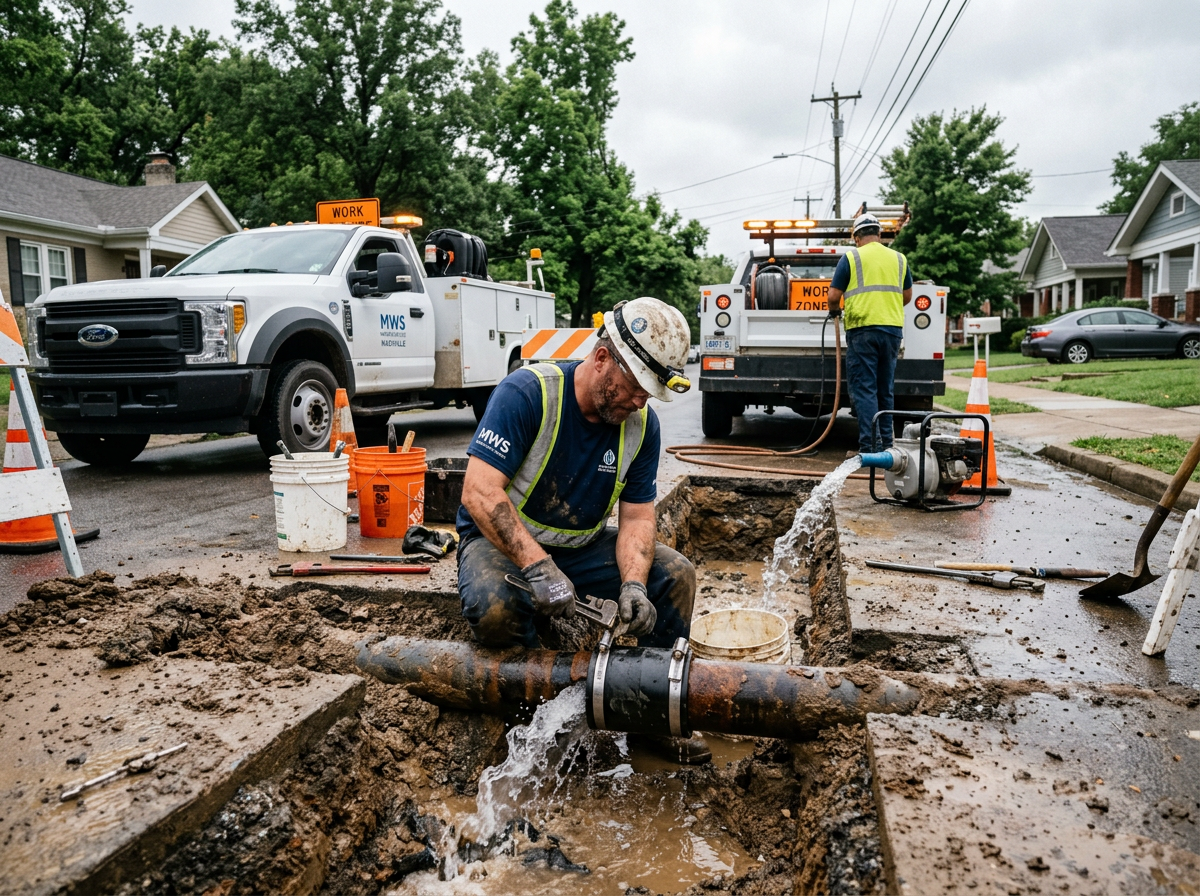
Nashville homes from the 1950s through 1980s in neighborhoods like Green Hills and Belle Meade often sit on monolithic slabs with copper or galvanized supply lines run beneath. These lines corrode from the outside in when acidic soil and poor drainage allow moisture to stay in contact year-round. A pinhole breach under the slab can go unnoticed until hot water use spikes or a faint musty odor appears near baseboards. Technicians start by isolating the line at the meter, then use acoustic and pressure testing to confirm flow loss without random concrete removal.
Humid subtropical summers push groundwater higher while cool winters cause the clay soils across Davidson County to contract, stressing joints where the line enters the foundation. In areas like Donelson and East Nashville, older ranch-style homes frequently have the main line running parallel to the driveway, making access points limited once landscaping or concrete has been added. Technicians map the line with electronic locators first, then create a narrow access trench rather than breaking large sections of slab. This approach keeps repair costs lower and reduces the chance of disturbing radiant heat tubing that some 1990s additions include.
Code requirements in Metro Nashville call for new underground lines to be sleeved and bedded in clean fill when replacement is needed. Technicians verify existing shutoff valves still operate before any excavation begins, because many original gate valves in Germantown and The Gulch properties have seized from lack of use. After repair, the line is pressure tested to 150 psi for 30 minutes and the trench is compacted in lifts to prevent future settlement under driveways or sidewalks.
Homeowners sometimes mistake a slab leak for a simple fixture drip, delaying action until flooring begins to buckle. Early signs include unexplained warm spots on tile floors or a sudden drop in water pressure when multiple fixtures run at once. Addressing the leak promptly protects the slab from prolonged moisture that can undermine the subgrade and affect nearby footings.
Technician insight
In Nashville, the thing that catches most people out with Water Line Leak Repair is the shrink-swell clay common across Davidson County. After a wet winter the soil contracts and pulls on older galvanized or copper lines under slabs in Donelson and Green Hills, creating leaks that only appear once summer humidity raises groundwater again.
Green Hills Ranch Slab Leak
Homeowner noticed warm tile near the kitchen and dropping pressure during morning showers. Tracing showed the main line running under the 1962 slab had corroded where it crossed a low drainage swale. A narrow trench along the side yard allowed replacement of the affected section with sleeved copper without disturbing interior flooring. Pressure test passed and the trench was compacted before sod replacement.
Water Line Leak Repair Services We Offer
✓Slab Leak Detection
Non-invasive acoustic and pressure testing locates water line breaches under concrete without unnecessary demolition in Nashville homes.
✓Copper Water Line Replacement
Full or sectional replacement of corroded copper lines using code-approved materials and proper bedding for Davidson County soil conditions.
✓Pex Water Line Retrofit
Conversion from rigid metal lines to flexible PEX where access allows, reducing future joint failures in older East Nashville and Donelson properties.
✓Main Shutoff Valve Service
Repair or replacement of seized main valves at the foundation to restore control before excavation begins on water line leaks.
✓Pressure Testing and Isolation
Systematic isolation of supply branches followed by sustained pressure tests to confirm leak location and post-repair integrity.
Water Line Leak Repair Cost in Tennessee
| Service | Typical Range | What Affects It |
|---|---|---|
| Leak Detection Visit | $250–$450 | Includes tracing and pressure test; credited toward repair if work proceeds same day |
| Sectional Water Line Repair | $800–$1,800 | Single pinhole fix with limited slab access in standard residential lots |
| Full Main Line Replacement | $2,200–$4,500 | Complete run from meter to foundation when multiple leaks or severe corrosion found |
| Valve Replacement Add-On | $300–$600 | New shutoff installed during line work when original valve is seized |
Ranges are typical for Tennessee and confirmed with an exact written quote before any work starts.
How it works
- 1
Site Assessment
Technician reviews meter data, interviews homeowner about pressure changes, and maps visible piping routes in the yard and crawlspace.
- 2
Line Location
Electronic locating equipment traces the water line path under the slab, marking entry and exit points relative to the foundation.
- 3
Targeted Access
Minimal concrete removal or trench excavation exposes the leak while protecting surrounding slab integrity and landscaping.
- 4
Repair And Test
Line section is replaced or sleeved, backfilled properly, then pressure tested before final surface restoration.
Pricing
Upfront quotes provided after inspection, with final cost driven by line depth, access constraints, and whether full replacement is required.